The solar quote is sitting on the kitchen bench. The panels are picked, the inverter is picked, and the installer has said the roof "looks fine". But it's the same concrete tile roof that came with the house 30 years ago, the ridge mortar has cracks you can see from the driveway, and you have a nagging feeling you should deal with it first.
That feeling is usually right. Roof restoration before solar panels go on is one of the easier calls in home maintenance to get right, and one of the more annoying to get wrong, because once the panels are bolted down the roof underneath them is very hard to reach.
Once the panels go on, that part of the roof is locked away
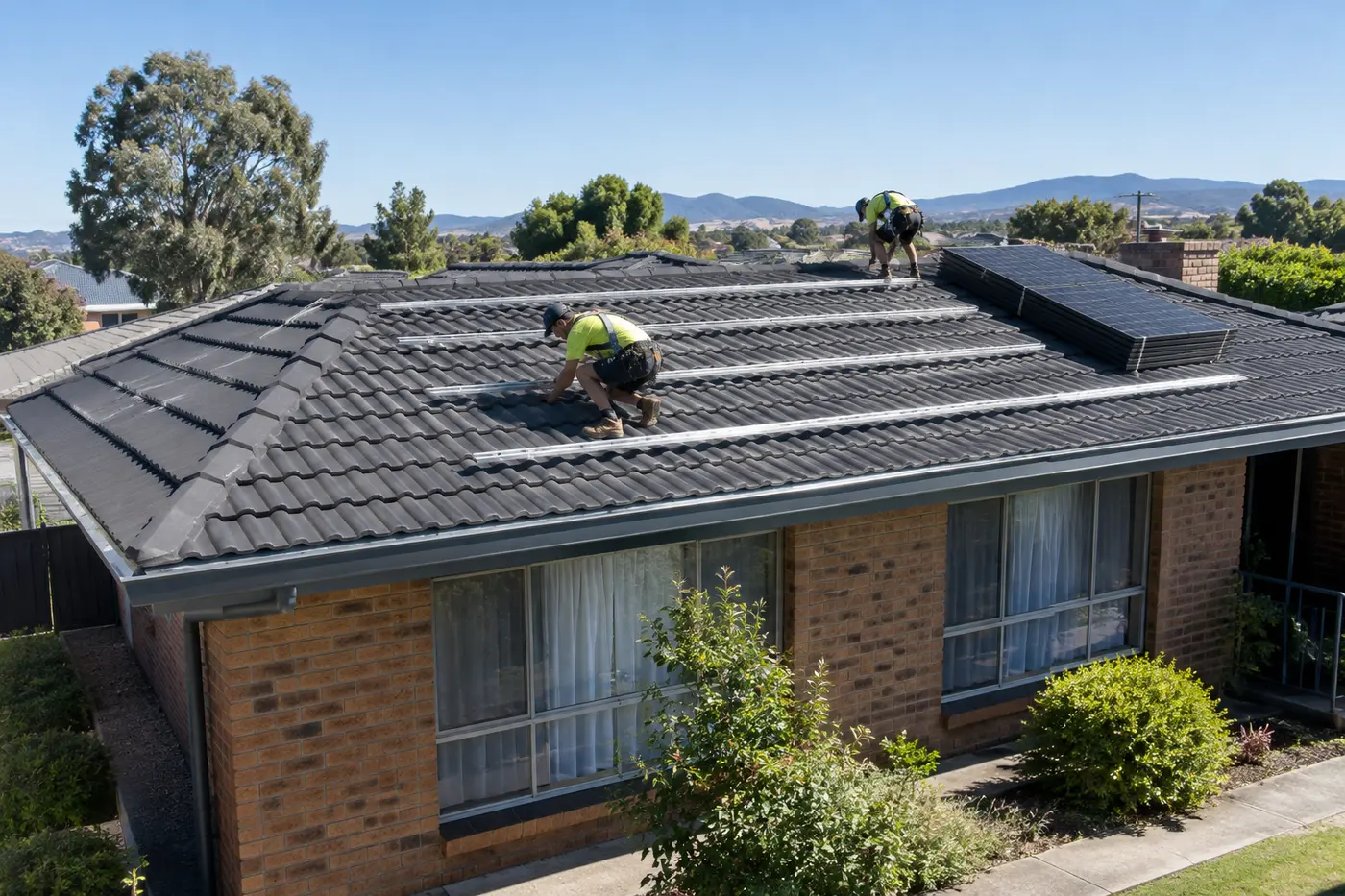
Solar panels sit on rails a short distance above the roof. On a tile roof, the installer lifts tiles, fixes brackets to the rafters underneath, then puts the tiles back around them. On a metal roof, the brackets screw through the sheets. Either way, the panels end up covering a big slab of the roof, and they are meant to stay there for a long time.
Anything that goes wrong under them later is awkward to fix. A cracked tile, a patch of worn coating or a rusting sheet under the array usually means the panels have to come off before anyone can do the work, then go back on afterwards. That part is a job for your solar installer, not a roofer. So you end up booking and paying two trades for what would have been a simple repair on a clear roof.
Doing the roof first avoids all of that. It's the same work either way. The only question is whether it happens before the panels or around them later.
The north face wears fastest, and that's where the panels go
This one surprises people. Solar panels here mostly go on the north facing side of the roof, because that's where they get the most sun. It's also the side that takes the most UV, so it's usually the part of the roof where the surface coating has broken down furthest.
On concrete tiles, a worn surface lets the tile soak up more water and hold it longer. On Colorbond and other metal roofs, the north side tends to fade and go chalky first. Our hot, clear summers in Albury and Wodonga make the difference between the sunny side and the shady side easy to spot on a lot of older roofs.
So the slope that is about to disappear under the panels is often the one most in need of attention. Covering it doesn't stop it ageing. It just means nobody sees the problem until it shows up as a stain on the ceiling.
What we check before solar goes on
A pre solar check is really a normal roof inspection with one extra question in mind: will anything here need work while the panels are up there? On a tile roof, we pay most attention to four things.
- Ridge capping: the curved tiles along the top lines of the roof, and the mortar that beds and seals them
- Cracked, chipped or slipped tiles, especially on the slopes where the array will sit
- Valleys, the metal channels where two slopes meet, which carry a lot of water and can rust or block
- The surface itself, including how much coating is left and whether moss or lichen has taken hold
Ridge mortar is the one we find most often. Our seasonal swing, from summer highs above 40°C to winter lows near 0°C, keeps the mortar expanding and contracting until it cracks. Panels don't usually sit over the ridge. But a ridge that lets water in can send it down the sarking (the membrane under the tiles) and into the ceiling well below where it got in, and that's much harder to trace with an array in the way.
Then there's foot traffic. Concrete tiles can crack underfoot, and any solar install means people moving around on the roof. That's one more reason to have repairs done and checked before the job, so you know what condition the roof was in when the installers arrived.
On metal roofs, we look for rust at the screws, laps and flashings, loose fixings, and how far the original finish has chalked or faded. If painting the sheets is on the cards, our guide on when repainting a Colorbond roof is worth it covers what a lasting job involves.
Restore first, install second
When the inspection shows the roof needs work, the order is simple. The roof is cleaned, repaired, repointed where needed and coated, and the solar goes on afterwards. We go through each step on our page about restoring a tile or metal roof, but the short version is that most residential restorations take one to three days on site, weather allowing.
Two practical things help. First, tell both trades about each other early. Your solar installer will want to know when the roof will be ready, and we can tell you how long the coating needs before people walk on it again. That timing comes from the coating manufacturer's specification, not a number we pick. Second, keep a copy of the restoration paperwork. It records what was done and when, which is handy if anyone ever asks about the roof's condition under the panels.
The timing works in your favour too. A restoration can add 15 to 20 years of service life to a roof with a sound structure, and the work carries our 15-year double-backed warranty on materials and workmanship. Starting the panels' life on a roof that has just been brought back up to standard is a far better match than starting it on one that's already well into its maintenance cycle.
When you can skip it, and when restoration isn't enough
Not every roof needs work before solar. Plenty of the homes in Thurgoona, Wirlinga, Baranduda and Leneva have roofs that are only a few years old. If an inspection finds sound tiles or sheets, tight fixings and a healthy surface, there's no reason to spend money on the roof just because panels are coming. You get a clear answer and go ahead with the install.
At the other end, some roofs are past restoring. If the rafters, the sarking or the tile bed are failing, a coating won't fix that, and putting panels on top would only make the eventual replacement harder. That's the time to talk about the bigger job first. In established areas such as Lavington and North Albury, where many concrete tile roofs are well into their life, it's worth knowing which side of that line your roof sits on before you sign a solar contract.
If you're weighing up roof work alongside the solar budget, we've explained what drives restoration pricing in Albury Wodonga and how to compare two quotes fairly.
Already have panels? The rest of the roof can still be done
If the solar is already up and the roof is showing its age, the exposed parts can still be cleaned, repaired and coated. The catch is the section under the array. We can coat around the panels, but the surface underneath stays as it is unless the panels come off. Whether that's worth doing depends on the condition of that hidden section, and it's a conversation between you, us and your solar installer once we've had a proper look.
Our team's Geelong operation sees this question as well. As Michael Monahan wrote in a Google review of Roof Restoration Geelong: "Great work. Restored a 30+ year old tiled roof before installing solar panels. Very happy customer."
Book the roof check before you sign the solar contract
The cheapest moment to sort out your roof is before anything is fixed to it. We inspect the whole roof, photograph what we find and give you a written assessment, so you know whether it needs nothing, a few repairs or a full job before the panels go on. See how our roof restoration service works, or call us on (02) 6084 7048 to book an inspection.